Selling your products in new countries is a fast way to grow. Digital ads make this easy. You can start showing ads in London, Tokyo, or Berlin with just a few clicks. But many small businesses lose money when they try this. They use the same setup they use at home and expect it to work. Usually, it does not.
International PPC requires a different plan. You are dealing with different languages, cultures, and laws. If you want to see a real return on your spend, you need to avoid the common traps.
Here are seven mistakes businesses make with international ads and how you can fix them.
1. Using Google Translate for Your Keywords
Many people take their best-performing English keywords and put them into a translator. This is a big error. Language is not just about words. It is about how people think and search.
A direct translation often misses the "intent" of the searcher. For example, a "running shoe" in the US is a "trainer" in the UK. If you bid on "running shoes" in London, you might miss a lot of buyers. In some languages, words have different meanings based on the region. Spanish in Mexico is not the same as Spanish in Spain.
The Fix:
Stop using automated translators for your ad copy. Use tools like Google Keyword Planner but set the location to your target country. Look at what locals actually type. You can also look at local forums or social media to see the slang they use. If you have the budget, ask a native speaker to check your list. If you want to learn more about setting up your account for success, check out our resources at International PPC.

2. Treating Every Country the Same
It is easy to group countries together. You might think "Europe" is one market. It is not. A buyer in Germany has different values than a buyer in Italy. German shoppers often care a lot about data privacy and technical specs. Italian shoppers might care more about style and brand story.
If your ad message is the same for everyone, it will be weak for everyone. You cannot use a "one size fits all" approach if you want to grow.
The Fix:
Create a buyer persona for each country. Ask yourself:
- What do they care about?
- Are they price-sensitive?
- Do they trust international brands?
Talk to your sales team if you have one. They know what questions customers from different regions ask. Adjust your ads to answer those specific questions.
3. Mixing Languages in One Campaign
This is a technical mistake that ruins your data. Some marketers target a country like Switzerland but only use one campaign. Switzerland has four official languages. If you show an English ad to someone searching in French, they will not click. If they do click, they will be annoyed.
Google gets confused when you mix languages in one campaign. It makes it hard to see which language is actually making you money.
The Fix:
Build separate campaigns for every language and location. For example, have one campaign for "France – French" and another for "Canada – French." This allows you to control your budget. You might find that French speakers in Canada buy more than French speakers in France. With separate campaigns, you can give more money to the one that works.
4. Using the Same Landing Page for Everyone
Imagine clicking an ad in your language, but the website is in a different language. You would leave immediately. Most people do. Even if the language is the same, the context might be wrong.
If you sell winter coats and show a "Winter Sale" ad to someone in Australia in July, you are failing. It is summer there. Using the same landing page for every country leads to high bounce rates and wasted money.
The Fix:
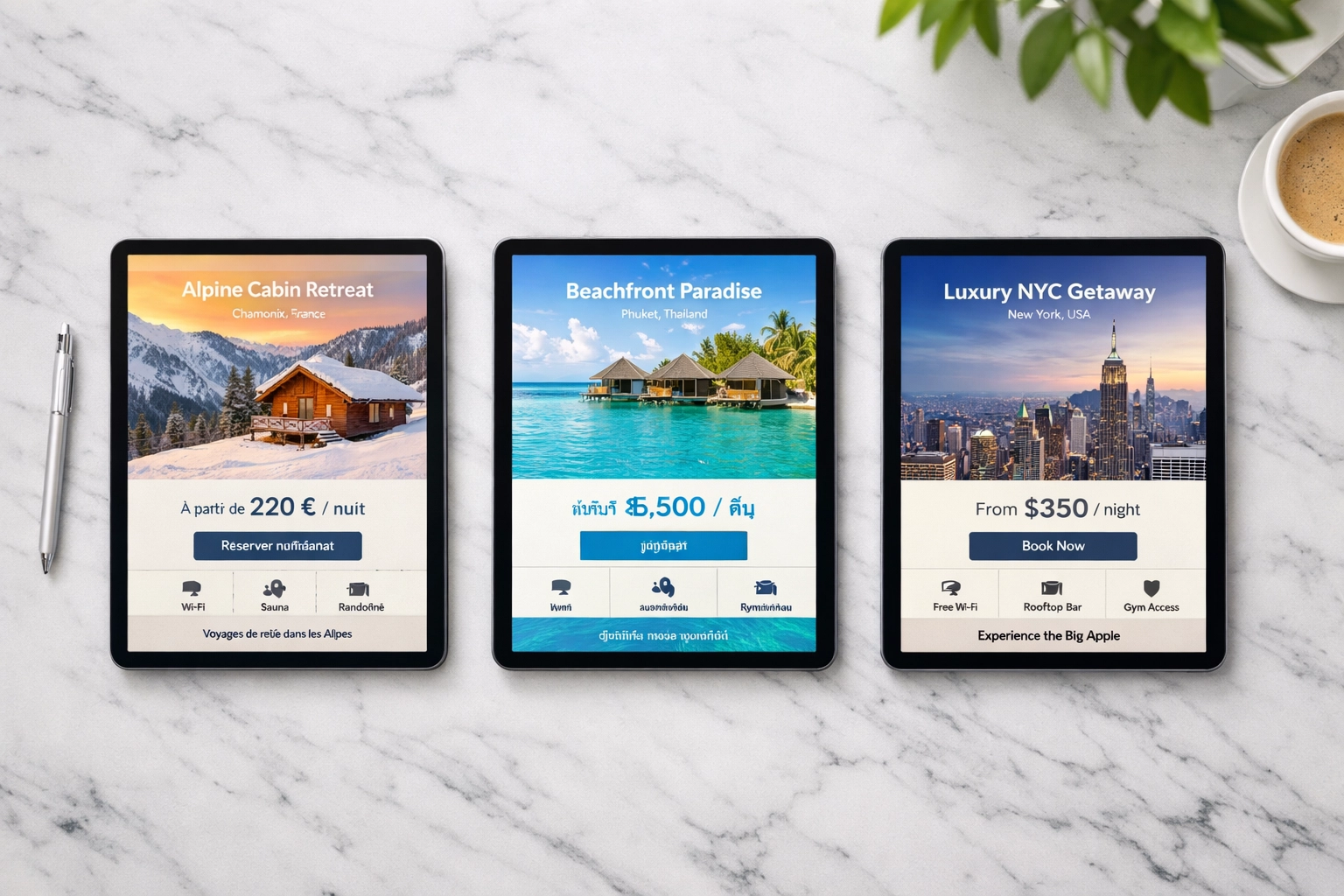
Match your landing page to your ad. If your ad is in Spanish, the page must be in Spanish. Use local currency. If you sell to the UK, show prices in Pounds. If you sell to Japan, show Yen. Use local phone numbers and addresses if you have them. This builds trust. Our team at International PPC helps businesses build these localized paths every day.
5. Forgetting About Brand Positioning
Your brand does not mean the same thing everywhere. In your home country, you might be the "affordable choice." In a new country, you might be seen as a "premium international import."
If you try to act like a local budget brand in a place where you are seen as an expensive import, your ads will feel "off." People might not believe your prices or your quality.
The Fix:
Research your competition in the new market. See who else is selling what you sell. If the local brands are very cheap, you might need to focus on your "international quality" or "unique features." Change your unique selling points (USPs) to fit the local market's gaps.
6. Spreading Your Budget Too Thin
Small businesses often try to launch in 10 countries at once with a small budget. They give each country $10 a day. This is not enough data to learn anything. You will get a few clicks here and there, but you won't know why people are or aren't buying.
You end up spending $100 a day across the world but getting zero sales. This makes people think international PPC doesn't work.
The Fix:
Start small to go big. Pick one or two markets that look the most promising. Put your full budget there. Learn what works. Once you have a winning strategy, move to the next country. Use the profits from the first market to fund the second one. This is how you grow a company safely. You can see how our admin suggests managing these budgets in our recent guides.

7. Ignoring Local Rules and Laws
Every country has its own rules for advertising. Some countries are very strict about health claims. Others have specific rules for financial products or toys. If you break these rules, Google will ban your ads. In some cases, you could even face legal trouble.
Also, consider "hidden" rules like holidays. If you run a big promotion during a local holiday where shops are closed, your shipping might be delayed. This leads to bad reviews.
The Fix:
Before you click "publish," check the local advertising laws. Google has a policy center that lists rules by country. Also, look at a local calendar. Know when the big holidays are. For example, don't forget about Ramadan or Lunar New Year if you are targeting those regions. These events change how people spend money.
How to Move Forward
International PPC is a powerful tool for growth. It lets you find customers you never knew existed. But it is not a "set it and forget it" task. You must be willing to learn and change your ads for each audience.
Avoid the "copy and paste" habit. Treat every new country as a new business launch. Use local words. Respect local cultures. Fix your landing pages. If you do these things, your international ads will stop costing you money and start making you money.
If you need help checking your current setup, we are here to help. International growth is a journey, and having the right map makes all the difference. Visit International PPC to see how we can help you scale your business across borders.