Selling products in other countries is an exciting way to grow. Many small businesses use ads on Google and Bing to find new customers. It works well. However, ads today are not just about good pictures and clever words. They are about following the rules. Specifically, they are about data privacy rules.
In 2026, these rules are more detailed than before. If you show ads to people in Europe, California, or even Rhode Island, you have to follow their specific laws. If these rules are not followed, your ad accounts might be stopped. Fines can also be very high.
This guide helps you understand the basics of global privacy. It is written for business owners who want to stay safe while growing.
Why Privacy Rules Exist
Privacy laws help people control their personal info. Personal info includes names, email addresses, and even the IP address of a computer. When someone clicks your ad, your website usually collects some of this info.
Governments want to make sure you use that info fairly. They want users to say "yes" before you track them. This is why you see so many pop-ups on websites now.
The Big Rules You Need to Know
There are three big sets of rules that most global businesses face.
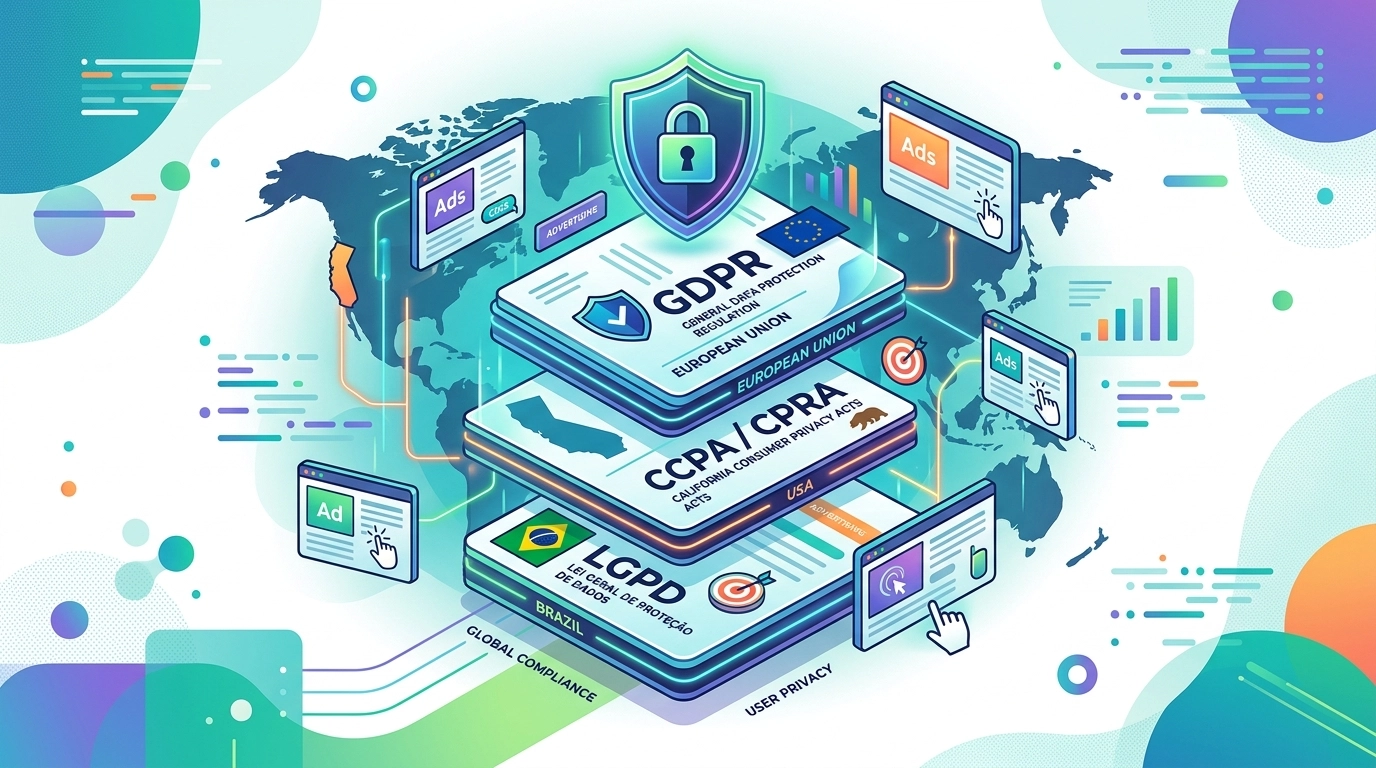
1. GDPR (Europe)
The General Data Protection Regulation is the rule for the European Union. It is very strict. It does not matter if your business is small. If you show ads to people in France or Germany, you must follow it.
In 2026, European regulators are looking closely at how ads use data. You must tell users exactly who gets their data. You cannot just say "third parties." You have to list them.
2. CCPA / CPRA (California)
California has its own rules. These are found in the California Consumer Privacy Act. These rules apply to you if you do a lot of business in California.
California requires a way for people to say "do not sell my info." They also have a new rule about "Global Privacy Control." This is a setting in a user's web browser. If their browser says "do not track me," your website must respect that automatically.
3. LGPD (Brazil)
Brazil also has a law called the LGPD. It is very similar to the rules in Europe. If you are selling to the large market in Brazil, you need to have a clear reason for collecting any data.
New Rules for 2026
Laws change every year. As of early 2026, new laws started in Kentucky, Rhode Island, and Indiana. These states now require small businesses to be more careful with data.
There is also a new law called the EU AI Act. Many ads now use AI to find the right customers. This law says that if you use high-risk AI for ads, you must be very transparent about it. You have to show how the AI makes decisions.
How to Ask for Permission
The way you ask for permission is called "consent." This is usually done with a cookie banner. In the past, these banners were small and hard to find. Now, they must be very clear.
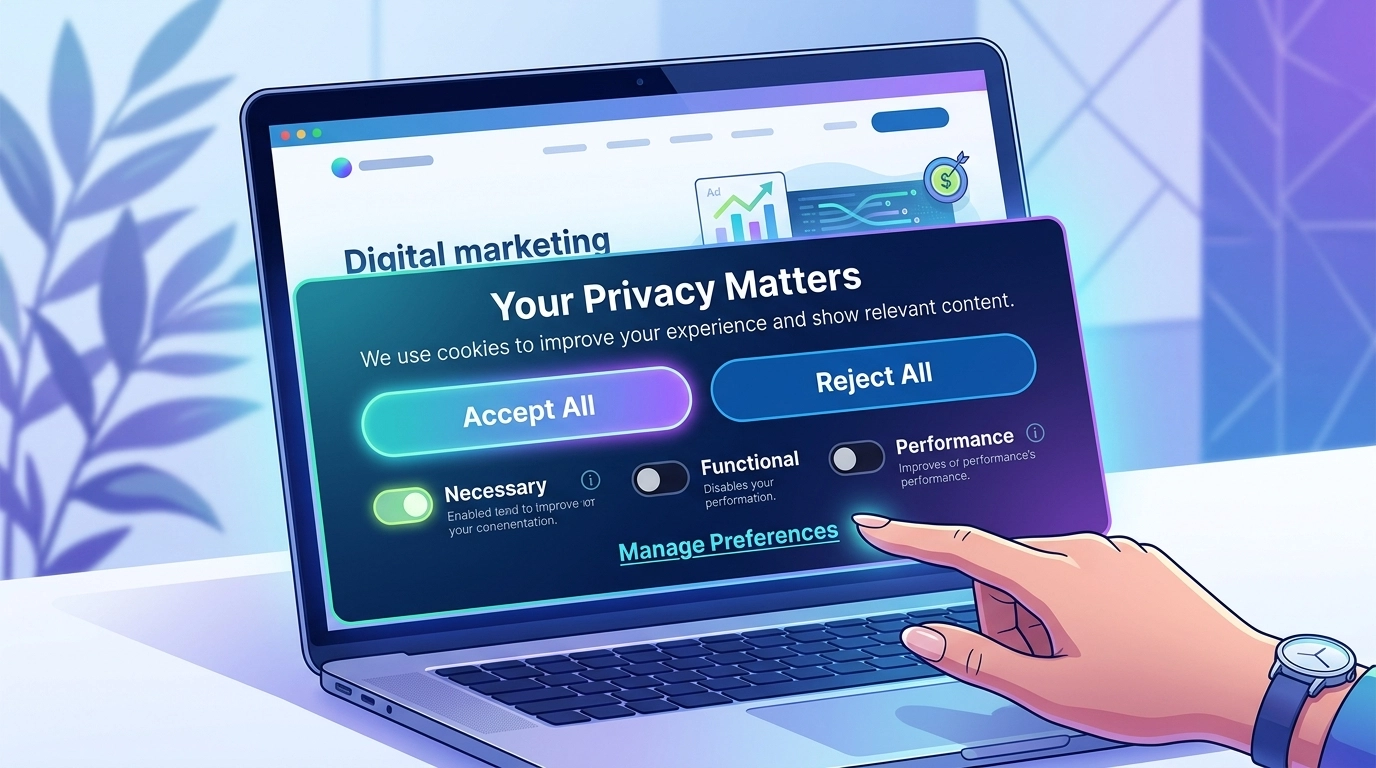
A good banner in 2026 follows these rules:
- One-Click Reject: The button to say "no" must be just as easy to find as the button to say "yes."
- No Dark Patterns: You cannot use colors or shapes to trick people into clicking "accept."
- Clear Choices: People should be able to pick what they want to share. Maybe they want to share data for analytics but not for ads. Your banner should let them choose.
You can use tools like OneTrust or Cookiebot to help with this. These tools change the banner based on where the user lives. A person in London will see a different banner than a person in New York.
Moving Data Across Borders
When a person in Italy clicks your ad, their data might travel to a server in the United States. This is called a "cross-border data transfer."

Rules about this are strict. You often need to sign special contracts called Standard Contractual Clauses (SCCs). These are legal papers that promise you will keep the data safe even when it moves. If these papers are not signed, data transfers are considered illegal.
Technical Standards for PPC
If you run ads on Google or Bing, you should know about the IAB TCF 2.2. This is a technical standard used in Europe. It helps your website tell the ad platform that the user said "yes" to being tracked.
If this technical signal is missing, Google might not show your ads to that person. This can make your ad budget less effective. You want to make sure your consent tool talks to your ad accounts correctly.
You should also check if your website supports Global Privacy Control (GPC). Many states in the US now require you to recognize this signal. It is a way for users to set their privacy once and have it work on every site they visit.
5 Steps for Your Small Business
Staying compliant does not have to be impossible. Here is a simple plan.
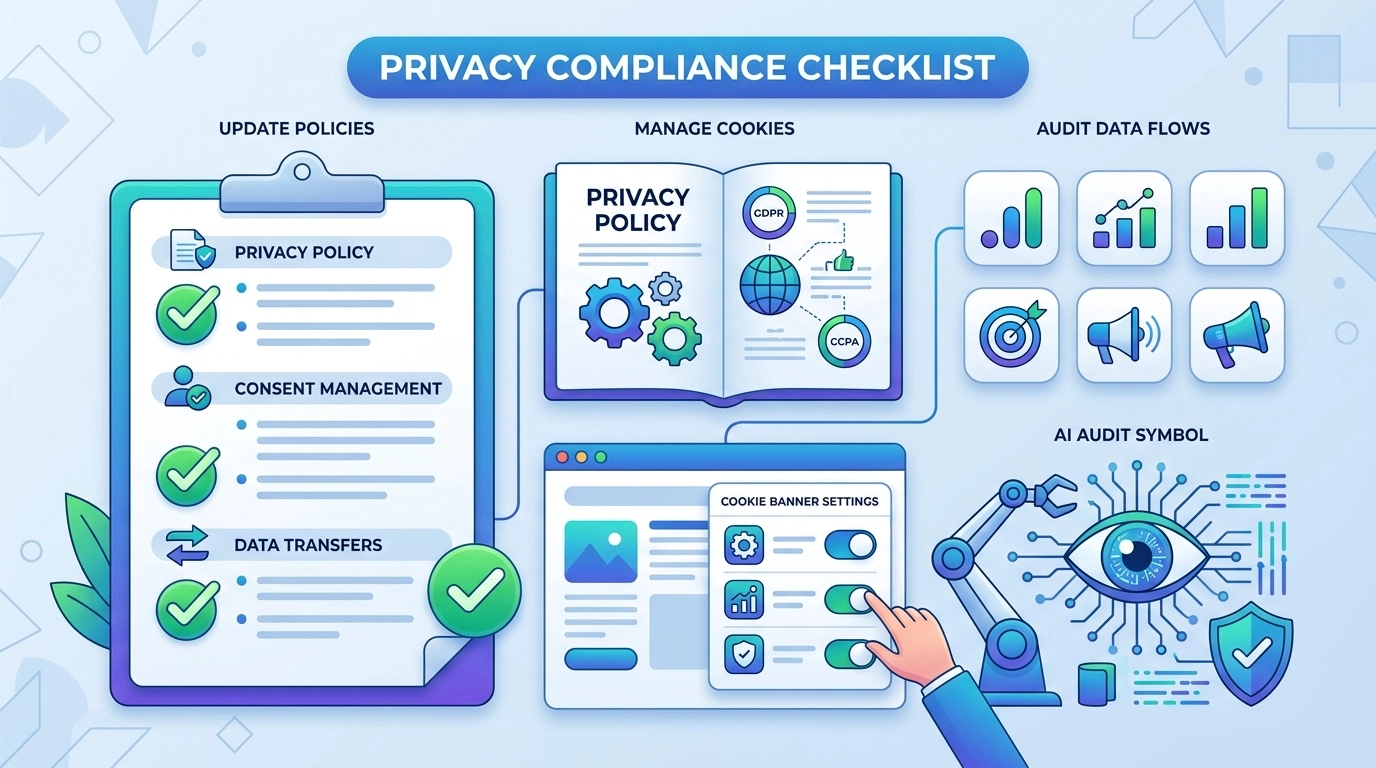
- Audit Your Data: Figure out what info you collect. Do you really need it all? If you do not need it, stop collecting it. This is called "data minimization."
- Update Your Banner: Make sure your cookie banner has a clear "Reject All" button. Make sure it shows up for the right people in the right countries.
- Write a Simple Privacy Policy: Your policy should be easy to read. Avoid big legal words. Tell people how to ask you to delete their data.
- Talk to Your Partners: Ask your ad agency or your tech providers if they follow the 2026 rules. They should be able to show you their compliance plan.
- Check Your AI: If you use AI tools for your marketing, ask the software company if they follow the EU AI Act.
Getting Professional Help
Managing ads in different countries is hard. There are many languages to translate and many laws to follow. It takes a lot of time and focus.
At International PPC, help is provided for businesses that want to grow globally. The complexity of running ads across many markets is handled by experts. This means your budget is used wisely and your ads stay within the rules.
When ads are built for the local market, they work better. This includes following the local privacy laws. If your ads are set up correctly from the start, you can focus on running your business.
Summary of Action Items
If nothing was found in your current privacy audit, please try these steps:
- Review your website's tracking pixels.
- Test your cookie banner on a mobile phone.
- Check if your privacy policy mentions the new 2026 state laws.
Privacy rules are not going away. They will likely get even more detailed. By starting with these basics, you protect your business and your customers. Global growth is possible when you follow the right path.
For more information on how to reach customers around the world safely, visit International PPC. We help your business reach customers while handling the technical and legal details of global advertising.