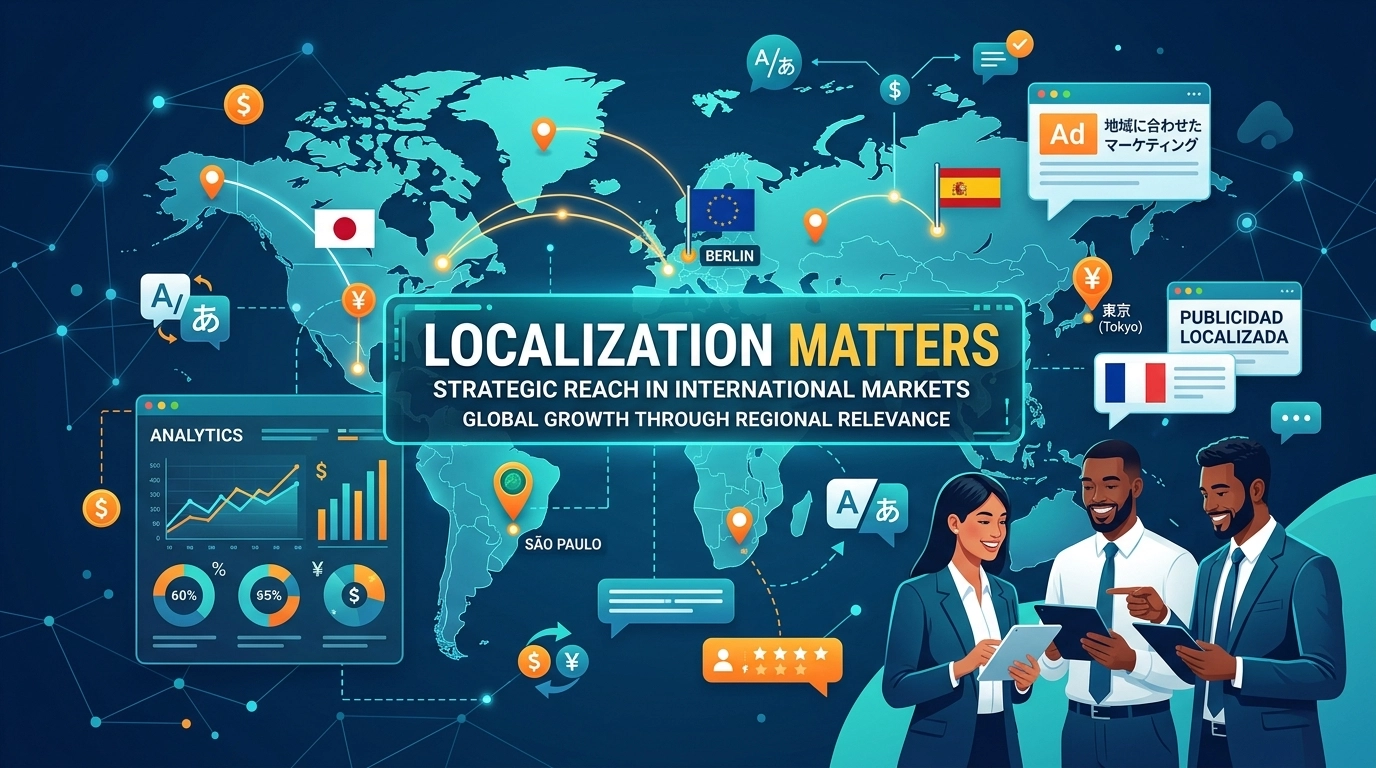
Growth requires moving into new places. Many businesses want to sell to people in other countries. This is a good way to find more customers. However, you cannot just use the same ads you use at home. People in different countries have different habits. They use different words to find things. They care about different details.
Localization is the process of making your marketing fit a specific place. It goes beyond changing the language. It changes how you talk to people. It changes what you show them. If you do this well, your company can grow fast. If you do it poorly, you will waste money.
Here are five steps to help your company grow in international markets.
1. SET GOALS
Before you start, you must have a plan. You need to know why you want to move into a new market. Do you want more sales? Do you want to build your brand? You must be ready to spend time and money. Growing globally takes work. It does not happen overnight.
Decide which countries are best for you. Look for places that are similar to your current market. Maybe they speak the same language. Maybe they have the same shopping habits. Start with one or two markets. Do not try to enter ten countries at once. This will make your work too hard.
You also need to decide on your strategy. Some companies use one message for the whole world. Others change their message for every country. For most small businesses, changing the message is better. This helps you connect with local people. You can learn more about how to reach customers around the world at International PPC.
2. RESEARCH MARKETS

You must learn about your target market. You need to know if people want what you sell. Look at the costs of doing business there. Look at the risks. Some countries have different laws for ads. Some have different taxes.
Check your competition. Who else is selling similar products? What are they doing well? What are they doing poorly? You can use tools like Google Market Finder to help. This tool shows you which markets are a good fit for your business. It gives you data on how many people are searching for your items.
Cultural research is also key. People in different countries have different values. What is polite in one place might be rude in another. Some colors mean different things. For example, red can mean luck in one country and danger in another. You need to understand these small details. If you miss them, people might not trust your brand.
3. ADAPT YOUR ADS
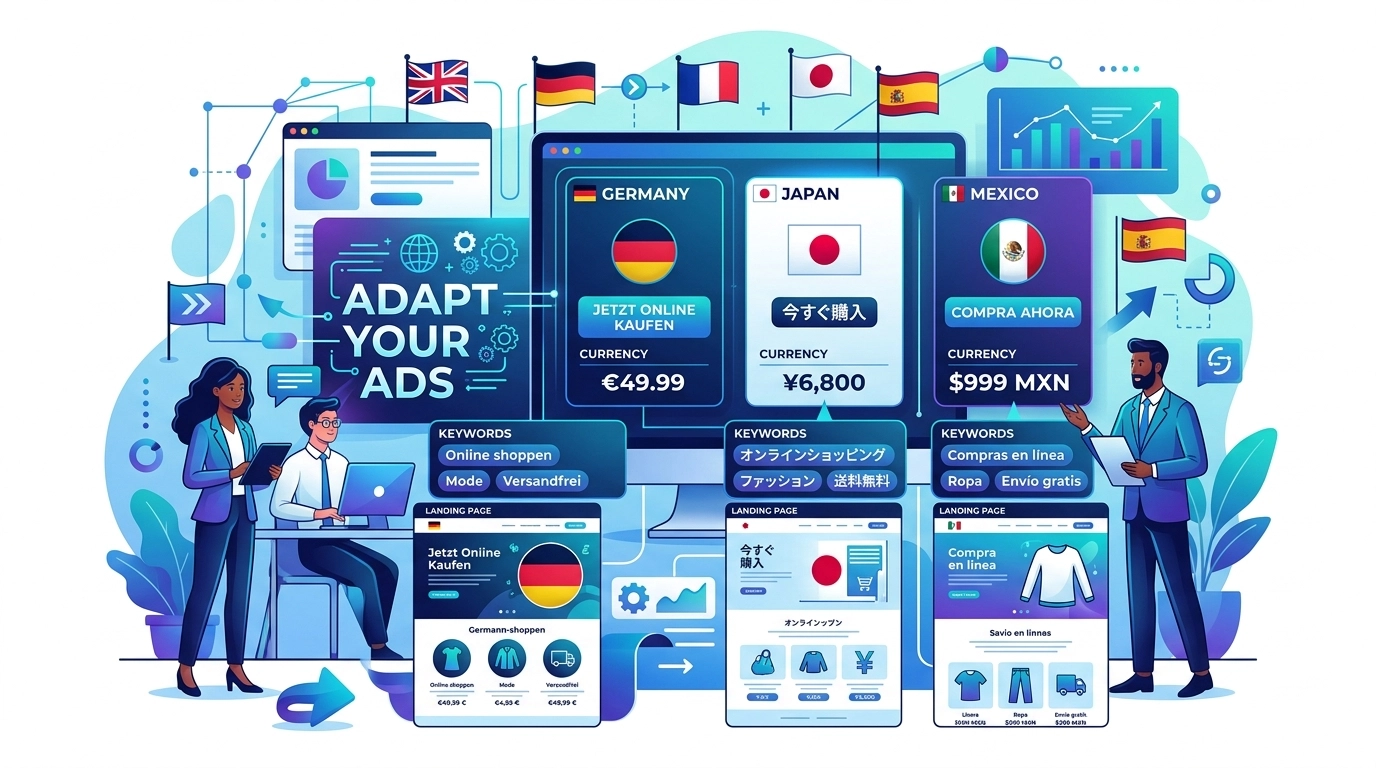
Once you pick a market, you must build your ads. Do not use a machine to translate your ads. Machine translation often makes mistakes. It can sound robotic. It might use words that people do not actually use.
Hire a person who speaks the local language natively. They know the slang. They know the idioms. They can make your ads sound natural. This is how you build trust. If an ad has bad grammar, people will not buy from you.
Your keywords must also change. People in the UK might search for "trainers." People in the US search for "sneakers." If you only use "sneakers" in the UK, nobody will find you. You need a list of keywords for every country.
Your landing pages need to change too. A landing page is the page people see after they click an ad. It should show local currency. It should show local phone numbers. If you have a local office, list the address. Use photos that look like the local area. These things make your business feel local. This helps you get more sales.
4. BUILD A WORKFLOW
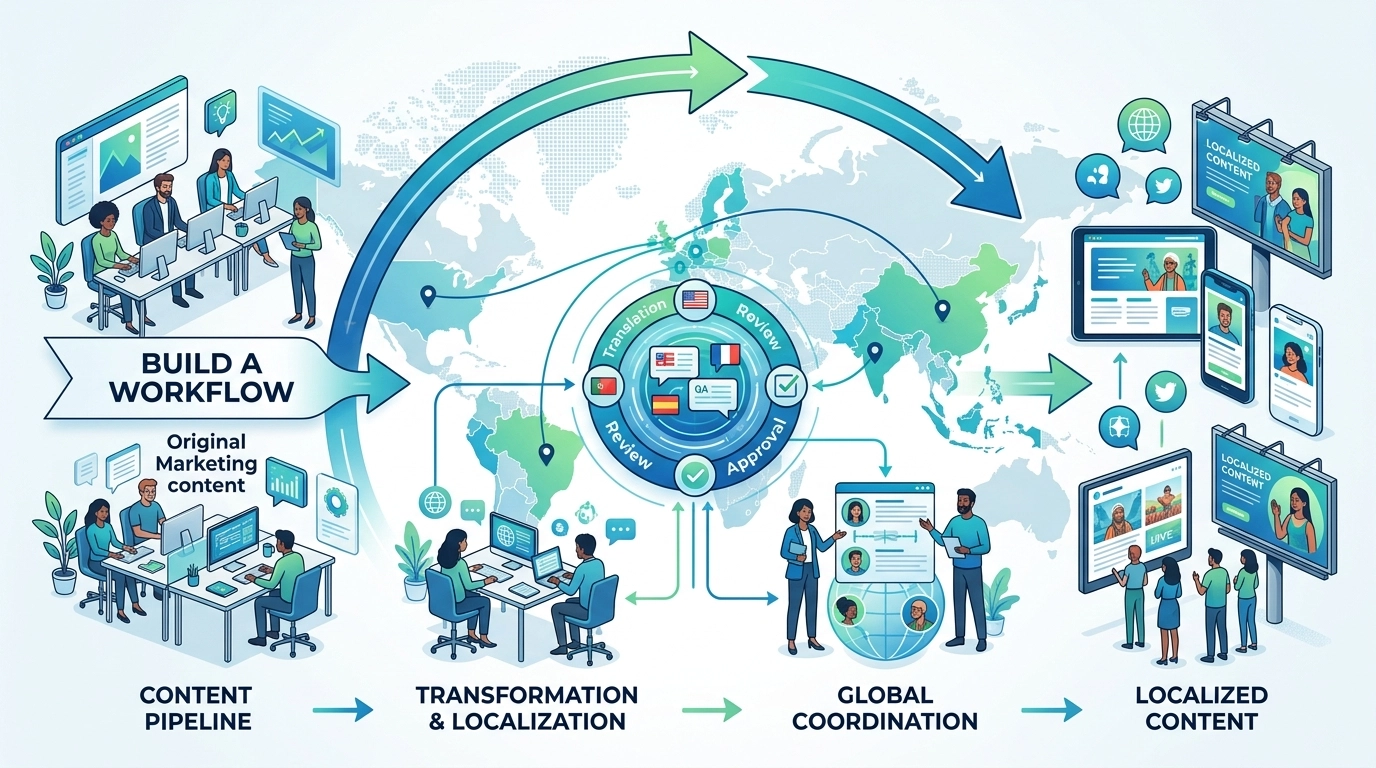
Localization is not a one-time job. You will always have new products. You will always have new sales. Your workflow must include localization from the start. When you make a new ad in English, plan for the other languages right away.
All your teams need to work together. The marketing team, the sales team, and the support team must all know the local plan. This keeps your message the same everywhere. If your ad is in French, your customer service should be able to help people in French. If they cannot, the customer will be unhappy.
Create a style guide for each language. A style guide is a list of rules for how to write. It includes which words to use and which words to avoid. It helps different translators write in the same way. This makes your brand look professional. It prevents confusion. You can find help with managing these complex tasks at International PPC.
5. TRACK AND GROW

After your ads are live, you must watch them. Look at the data. See which ads are getting clicks. See which ads are making money. Every market is different. What works in Germany might not work in Japan.
Start with a small budget. This allows you to test your ideas without losing a lot of money. When you find an ad that works, you can spend more money on it. This is called scaling. You grow your budget as your sales grow.
Check your results often. Look for patterns. Maybe people click your ads more on weekends. Maybe they prefer certain types of images. Use this information to make your ads better. Localization is a cycle of testing and improving. The more you learn about your local customers, the better your ads will become.
SUMMARY OF ACTION STEPS
Following a clear path helps you succeed. Here is a list of what to do:
- Set specific goals for each new country.
- Use data tools to find the best markets.
- Hire native speakers to write your ad copy.
- Update landing pages with local currency and addresses.
- Create a system for ongoing localization work.
- Watch your data and spend money where you see results.
Growth is possible for any business. You just need to speak to people in their own way. When you respect local culture and habits, people respond. They become loyal customers. This leads to long-term success for your company.
If you need help with these steps, professional support is available. Managing ads in many languages is a big task. It takes time and constant attention. Using experts can make your budget work harder. It helps you reach the right people in the right way. Explore more about global advertising at International PPC.
Please try these steps to begin your global growth. Start small and learn as you go. Focus on the needs of your local customers. This is the best way to build a global brand.